Slab Leak vs. Burst Pipe: What's the Difference?
A burst pipe is usually visible in a wall, attic or yard. A slab leak hides under concrete and shows up through bills, warm floors and damp flooring.
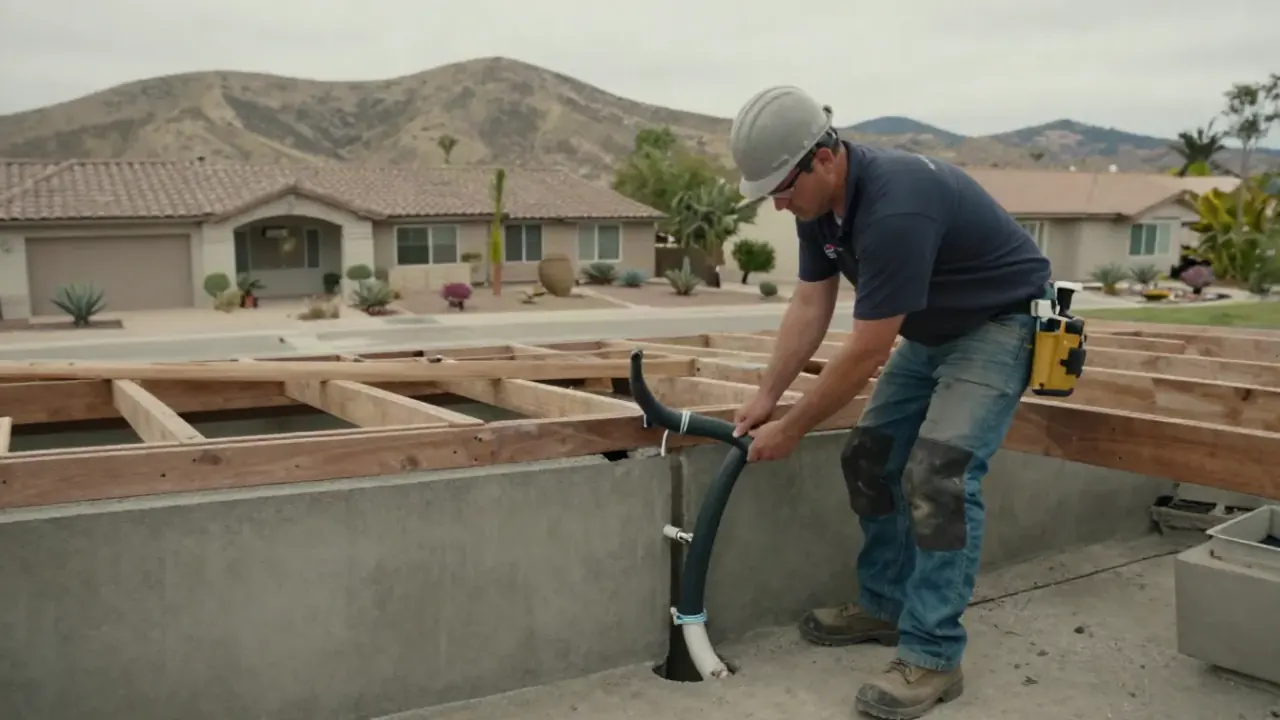
A burst pipe is usually visible, in a wall, attic or outside the house, while a slab leak is hidden under the concrete floor and shows up through indirect symptoms. That is the core difference: one announces itself with water, the other leaves clues. In Tustin, where many homes are built on slabs, knowing which problem you have decides who you call and how fast you need to act. Below, we compare the two side by side, explain what each looks like in a real house, and cover what to do first.
What is the main difference between a slab leak and a burst pipe?
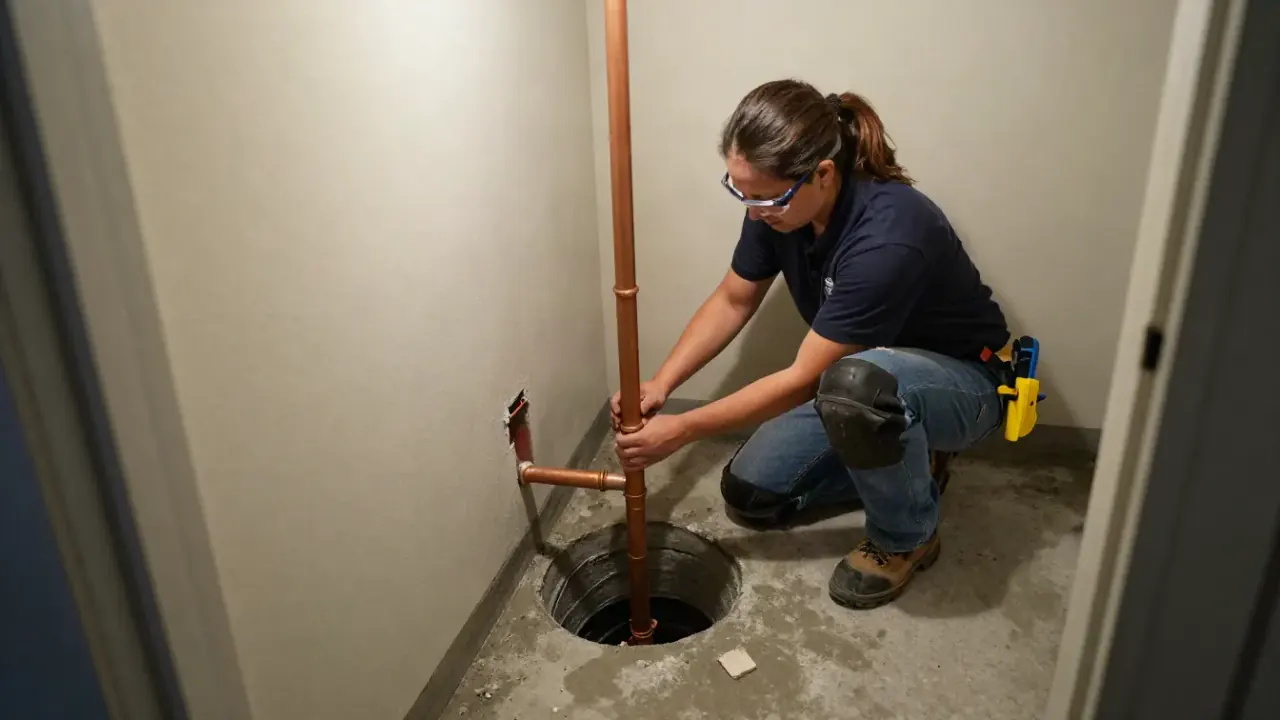
The main difference between a slab leak and a burst pipe is location and visibility. A slab leak is a leak in a water line running under or within a home's concrete foundation. A burst pipe is a rupture in a line you can usually see or reach, such as one in a wall, attic, crawl space or yard.
That one distinction drives everything else. Visible water means you can find, stop and often fix the problem quickly. Hidden water means you have to detect it first.
It is worth noting that a burst pipe tends to be sudden and dramatic. A slab leak is often slow. Water seeps out of a pinhole into concrete and soil for weeks or months before anyone notices.
How does a burst pipe show itself?
A burst pipe shows itself with obvious water: a spray, a stain spreading across a ceiling, a soaked wall or pooling water outside. The location is visible, and the problem is usually urgent.
Because the line is accessible, you can often tell where it is from the damage alone. A ceiling stain points to an attic or upper-floor line. A wet exterior patch points to a line outside the house.
The first step is the same regardless: shut off the main water valve. Then call a plumber.
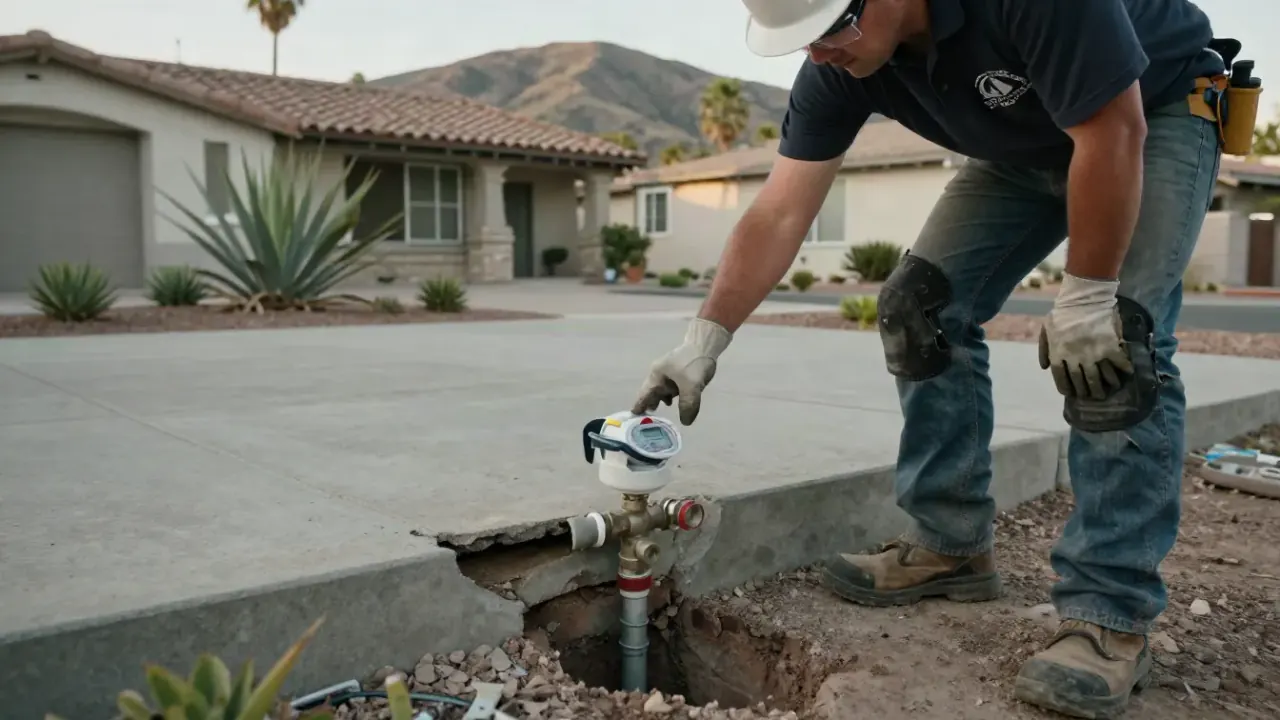
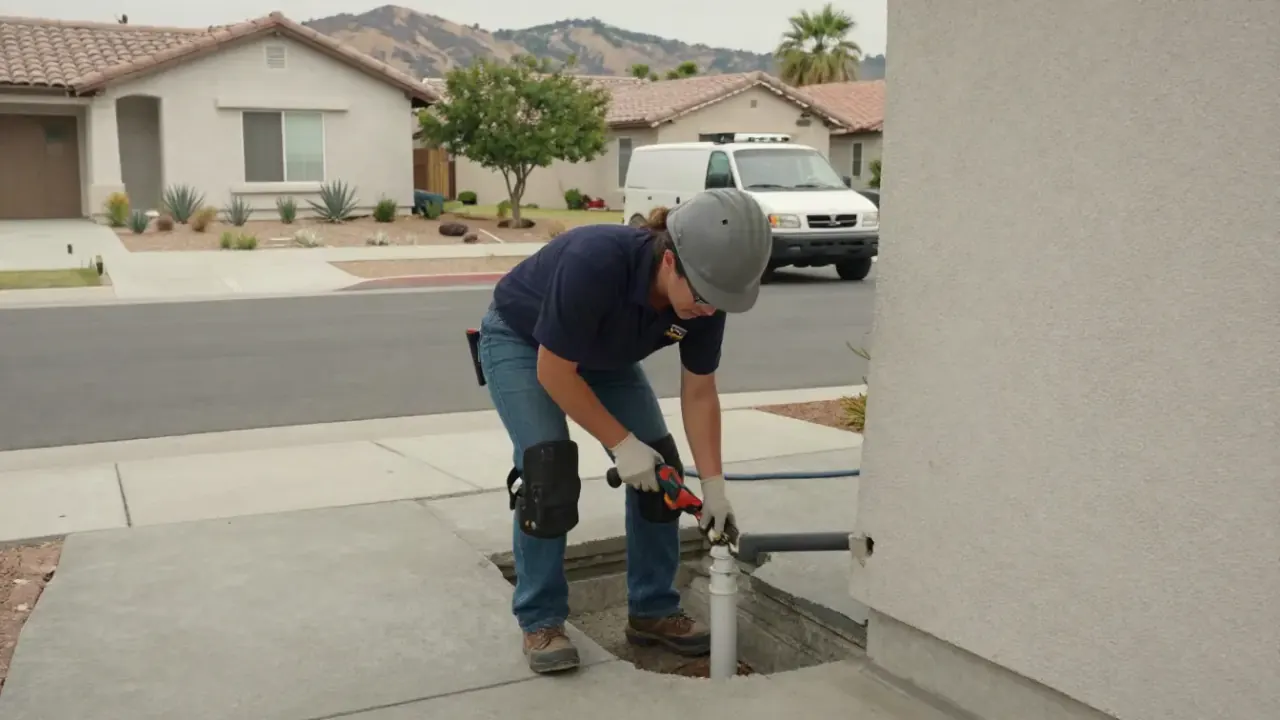
If the problem is outside the home, it may involve the line that carries water to the house. In that case, Water Service Line Leak Repair in Tustin is one of the services that may apply, since that supply line often runs through the yard.
How does a slab leak show itself?
A slab leak shows itself through indirect symptoms because the pipe is buried under concrete. You will not see water, but you will see its effects.
- A higher water bill with no visible leak.
- A water meter that moves when every fixture is off.
- Low water pressure.
- Warm spots on the floor, which suggest a hot water line.
- Damp carpet or a mildew smell.
- Buckling floors.
- Cracks in walls or baseboards.
- The sound of running water when nothing is on.
Any single sign can have another cause. A few together make a hidden leak much more likely.
An unexplained bill is often the first clue. A High Water Bill Leak Investigation in Tustin can test whether the bill is caused by a leak and help narrow down where.
Side-by-side comparison
A side-by-side comparison of slab leaks and burst pipes makes the differences easy to scan. Use it as a starting point, not a diagnosis.
Where the water goes
With a burst pipe, water usually appears where the pipe is: in a wall, ceiling or yard. With a slab leak, water goes into the concrete and soil first, then moves outward. It may eventually reach flooring and baseboards.
How fast you notice
Burst pipes tend to be noticed quickly because they cause visible mess. Slab leaks can run quietly. The first sign might be next month's water bill.
How it is found
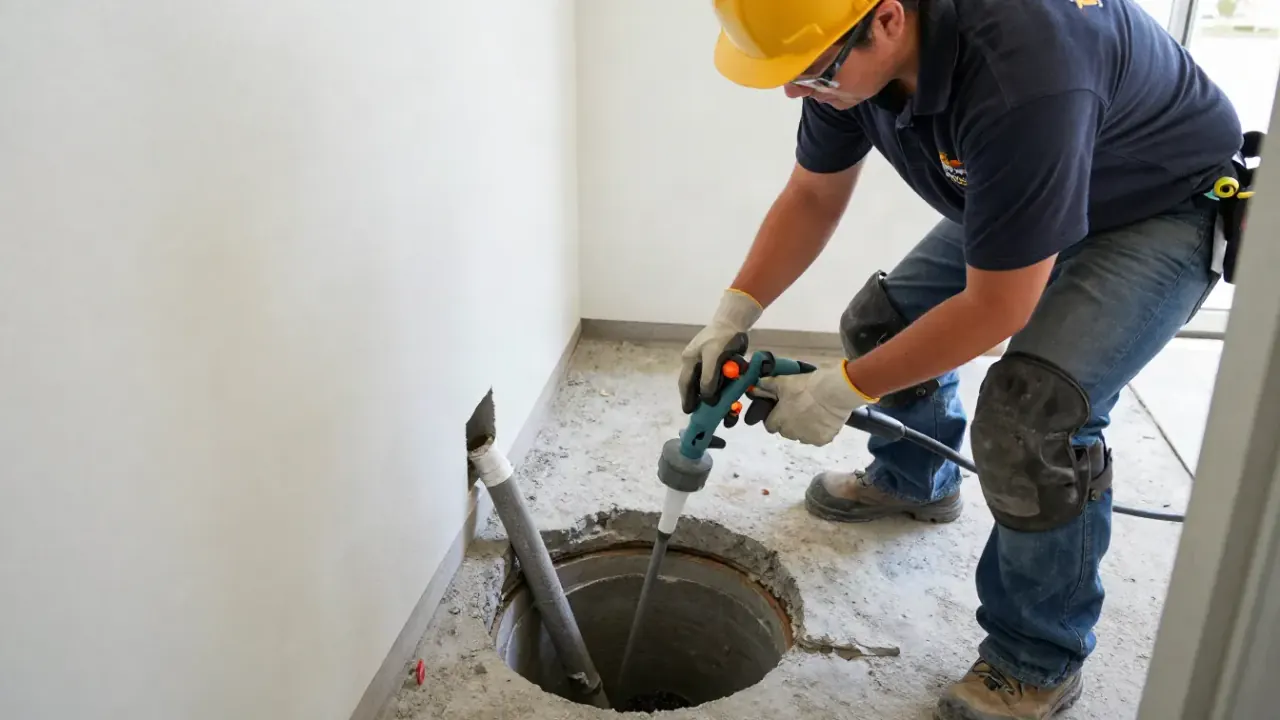
A burst pipe is found by looking. A slab leak is found by testing, using acoustic listening, thermal or infrared imaging, pressure testing and video pipe inspection.
What it takes to fix
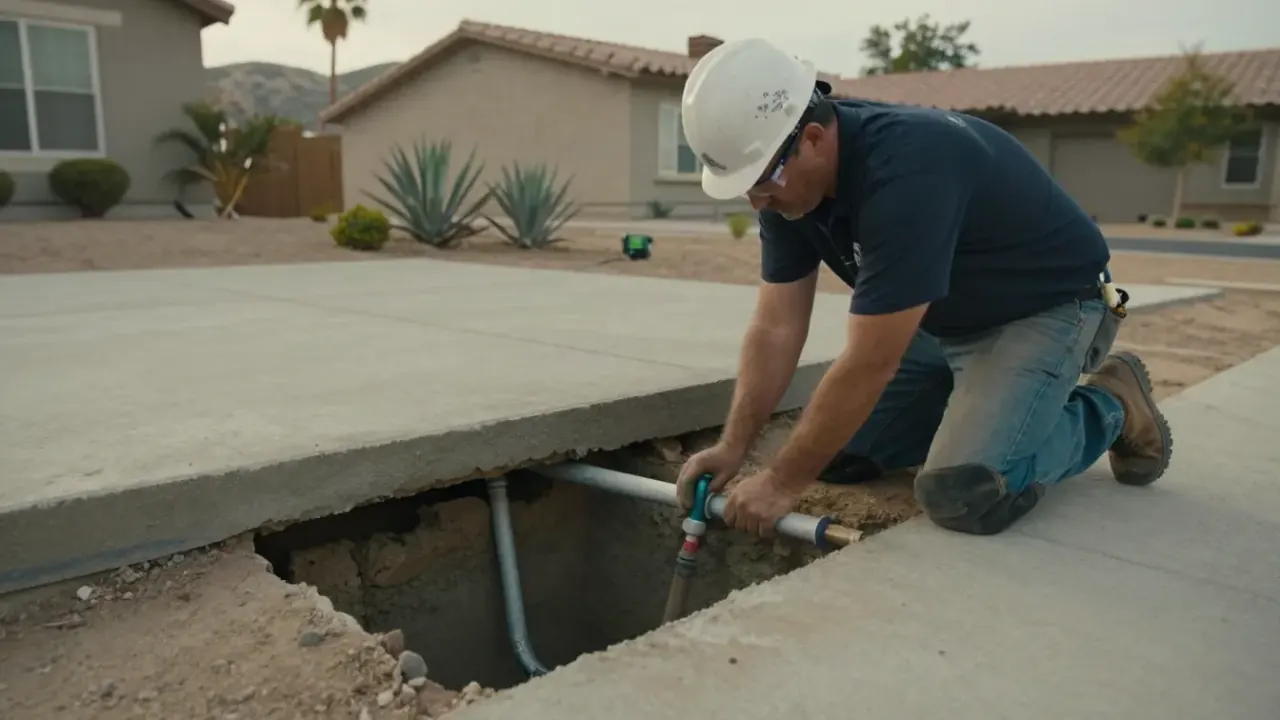
A burst pipe in a wall can often be repaired by opening the wall. A slab leak calls for a decision about access. Methods include direct access through the slab, tunneling, epoxy lining and rerouting through walls or the attic.
How are the two repaired differently?
A burst pipe and a slab leak are repaired differently because one is reachable and the other is buried. A burst pipe is usually repaired by cutting out the damaged section and replacing it. A slab leak requires locating the leak, then choosing among several access methods.
Because a buried line is harder to reach, the repair strategy depends on pipe condition. If the pipe is in reasonable shape, lining may work. If there are multiple leaks or aging pipes, rerouting through walls or the attic may be the better fit. Some homes end up looking at Whole-House Repiping in Tustin when the problem turns out to be system-wide.
Typical slab leak repair costs roughly $630 to $4,400, with severe or hard-access jobs up to about $6,750, according to This Old House. Angi's average is about $2,300. Those are typical 2026 ranges, and your price depends on access, method and location. A burst pipe in an accessible wall can follow a very different price pattern.
Hillside homes, such as those near Slab Leak Repair in Cowan Heights, tend to raise access questions for any buried line. A site visit will tell you what applies to your property.
Common mistakes when telling them apart
Common mistakes when telling a slab leak from a burst pipe include assuming no visible water means no leak, and blaming appliances or irrigation before checking the meter. A few habits cut through the confusion.
- Ignoring a moving meter. Turn everything off. If the meter keeps running, water is escaping.
- Blaming the water heater for warm floor spots. A hot line under the slab can do the same thing.
- Waiting for a puddle. Slab leaks often never produce one.
- Using chemical drain cleaners as a test. Harsh chemicals can attack pipes and do not diagnose leaks.
- Mixing up symptoms. A low pressure complaint may come from a leak, a clogged fixture or a regulator problem.
When to call a professional
You should call a plumber right away if water is visible and spreading, and as soon as possible if you see two or more slab leak symptoms. Do not wait to see if it resolves on its own.
Shut off the main water valve if water is actively escaping. If hot water is involved, turn off the water heater and shut off its gas or power per the manufacturer's guidance. Move belongings off wet floors, photograph the damage for your insurer, and call your insurer.
Tustin Slab Leak Repair can help sort out whether you are dealing with a buried leak. For homes in places like Slab Leak Repair in Peppertree, an accurate diagnosis is the first step to choosing a repair, and it can save you from fixing the wrong thing.
Frequently Asked Questions
Is a slab leak the same as a burst pipe?
No. A burst pipe is usually visible in a wall, attic or yard. A slab leak is hidden under concrete and shows up through bills, warm floors and damp flooring.
Can a slab leak become a burst pipe?
A slab leak is a leak, not a rupture, but a worn buried pipe can fail further over time. Early repair limits damage to the slab, flooring and surrounding materials.
How can I tell which one I have?
Look for visible water first. If there is none, turn off every fixture and check the meter. A moving meter, warm floor spots or damp carpet point to a slab leak.
Which is more expensive to fix?
Slab leaks typically run roughly $630 to $4,400, with hard-access jobs near $6,750. Burst pipes vary by location and damage, so costs depend on what must be opened and replaced.
What should I do first for either one?
Shut off the main water valve, then call a plumber. Photograph damage and call your insurer. If hot water is involved, turn off the water heater per manufacturer guidance.
Get help with Slab Leak Repair in Tustin
Not sure whether you have a slab leak or a burst pipe? Describe what you are seeing and we will help sort it out. Call Tustin Slab Leak Repair at (657) 359-9075.